

Table of Contents
Introduction: Pancake
The All-American Breakfast Staple
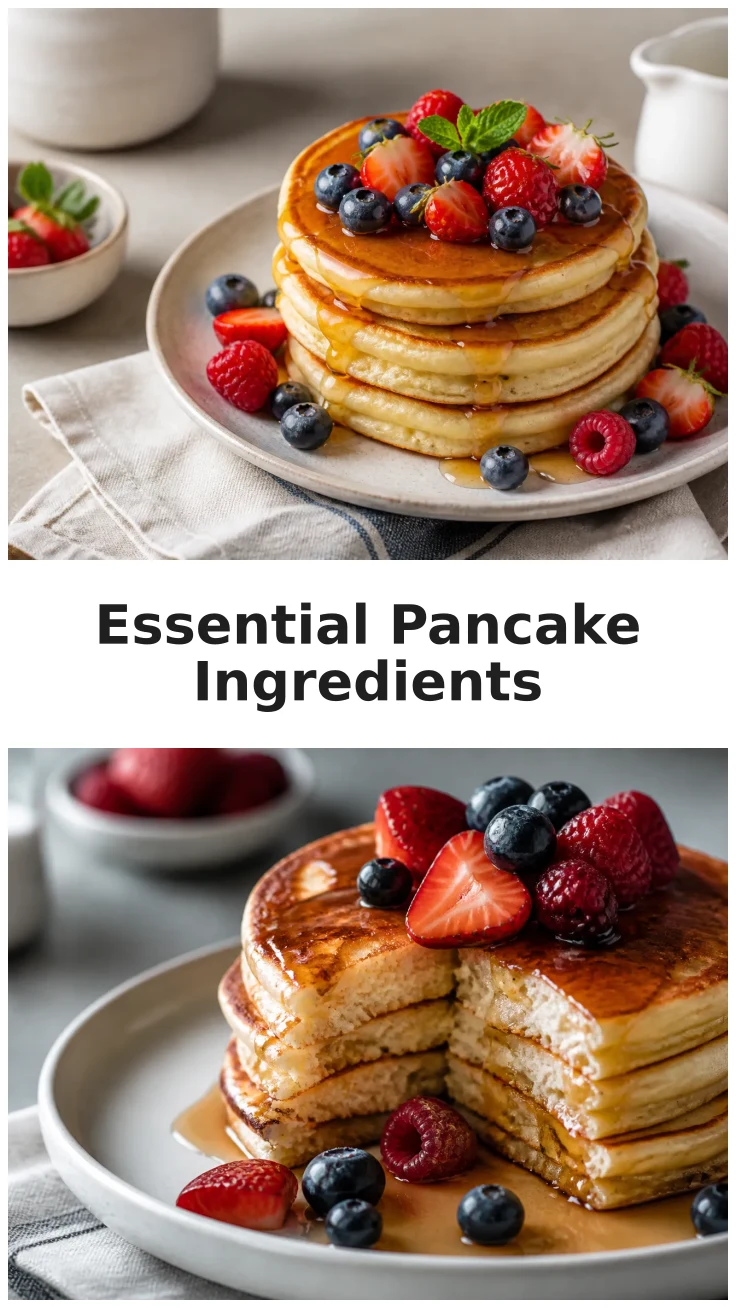
Pancakes are a beloved breakfast classic in the United States, cherished for their fluffy texture and versatile flavor profile. They can be enjoyed plain with a drizzle of syrup, or you can get creative with various toppings and mix-ins. No matter how you like them, understanding the essential ingredients of pancake is key to mastering this delightful dish.
Why Ingredients Matter
The ingredients you choose for your pancakes can significantly impact their texture, flavor, and fluffiness. Basic ingredients like flour, eggs, and milk form the foundation, while optional add-ins such as vanilla extract or blueberries can enhance the taste and make your pancakes unique. Knowing each ingredient’s role will help you create the perfect pancake every time.

Love easy home cooking like this? 🍔
Get simple American recipes, quick dinners and homemade desserts in your inbox every week. Free, no spam, unsubscribe anytime. See our Privacy Policy.
Ingredients
Basic Ingredients for Pancakes
The fundamental ingredients for a classic pancake include all-purpose flour, baking powder, sugar, salt, milk, eggs, and butter. Each component plays a crucial role in achieving the desired pancake texture and flavor. Flour forms the structure, baking powder acts as the leavening agent, sugar adds sweetness, and eggs provide richness and help bind the ingredients together.
Optional Add-ins for Extra Flavor
To elevate your pancakes, consider adding ingredients like vanilla extract, cinnamon, or fresh fruits such as blueberries or bananas. These additions can introduce new flavors and textures, making each bite more exciting. You can also explore unique variations like Pumpkin Cottage Cheese Pancakes for a seasonal twist. For more inspiration, check out High Protein Peach Cottage Cheese Pancakes.
Pro Tips
Mastering the art of pancake-making requires some insider knowledge. Here are some pro tips to help you make the best pancakes possible.
- Ensure your ingredients are at room temperature to create a smooth batter.
- Do not overmix the batter, as this can result in tough pancakes.
- Let the batter rest for a few minutes before cooking to allow the flour to fully hydrate.
- Use a non-stick skillet or griddle and ensure it is hot before adding the batter.
One of the most crucial tips is to maintain a consistent cooking temperature. Fluctuations can lead to uneven cooking and a less fluffy texture. For more healthy pancake options, check out our Oatmeal Protein Pancakes.
Step-by-Step Instructions
Mixing the Ingredients
Begin by combining the dry ingredients in a large bowl. In a separate bowl, whisk together the milk, eggs, and melted butter. Gradually add the wet ingredients to the dry ingredients, stirring until just combined. It’s okay if the batter is slightly lumpy; overmixing can lead to tough pancakes.
Cooking the Pancakes
Heat a non-stick skillet over medium heat. Once hot, lightly grease the pan with butter or cooking spray. Pour 1/4 cup of batter onto the skillet for each pancake. Cook until bubbles form on the surface, then flip and cook until golden brown. Repeat with the remaining batter.
Love easy home cooking like this? 🍔
Get simple American recipes, quick dinners and homemade desserts in your inbox every week. Free, no spam, unsubscribe anytime. See our Privacy Policy.
Serving Suggestions
Classic Toppings
Traditional pancake toppings include maple syrup, butter, and powdered sugar. For an extra indulgent breakfast, consider adding whipped cream or a scoop of ice cream. Try our Strawberry Pancakes Recipe for a fruity twist.
Creative Serving Ideas
For a unique take on pancakes, try serving them with savory toppings like crispy bacon or a side of scrambled eggs. You can also explore pairing them with unexpected flavors, such as a drizzle of warm Creamy Broccoli Pasta.
Nutritional Information
Caloric Breakdown
The average pancake serving contains about 150-200 calories, depending on the size and additional toppings. Keeping portion sizes in mind can help you maintain a balanced breakfast.
Nutritional Benefits
Pancakes are a great source of carbohydrates, providing you with the energy needed to start your day. Adding fruits or nuts can increase the nutritional value, offering vitamins, minerals, and healthy fats.


Classic Pancakes

Equipment
- 1 non-stick skillet
- 1 mixing bowl large
- 1 whisk
Ingredients
Dry Ingredients
- 1 1/2 cups all-purpose flour
- 3 1/2 tsp baking powder
- 1 tbsp sugar
- 1/2 tsp salt
Wet Ingredients
- 1 1/4 cups milk
- 1 egg
- 3 tbsp melted butter
Instructions
Preparation
- In a large mixing bowl, combine the flour, baking powder, sugar, and salt. Stir well to ensure even distribution.
- In another bowl, whisk together the milk, egg, and melted butter until well combined.
- Gradually add the wet ingredients to the dry ingredients, stirring gently until just combined. Do not overmix; a few lumps are fine.
Serving
- Heat a non-stick skillet over medium heat. Lightly grease with butter or cooking spray. Pour 1/4 cup of batter onto the skillet for each pancake. Cook until bubbles form on the surface, then flip and cook until golden brown on the other side.
- Serve the pancakes warm with your choice of toppings such as maple syrup, fresh fruit, or whipped cream.
Storage
- Allow any leftover pancakes to cool completely. Store them in an airtight container in the refrigerator for up to 2 days. Reheat in the microwave or a toaster oven before serving.
Notes
FAQ
How can I make my pancakes even fluffier?
To make your pancakes fluffier, ensure that your baking powder is fresh, as it is responsible for the rise in pancakes. Additionally, allow the batter to rest for about 5-10 minutes before cooking to let the leavening agents work their magic. Using a non-stick pan and cooking at a consistent medium heat can also help in achieving the perfect fluffiness.
Can I use a different type of flour for pancakes?
Yes, you can substitute all-purpose flour with other types of flour like whole wheat flour for a healthier option, or almond flour for a gluten-free alternative. However, keep in mind that substitutions may affect the texture and flavor slightly. It might be necessary to adjust the liquid content to achieve the same batter consistency.
Enjoyed this recipe? Leave a review!
There are no reviews yet. Be the first one to write one.

