

Table of Contents
Introduction: Mango Coconut Agar Jelly Cups
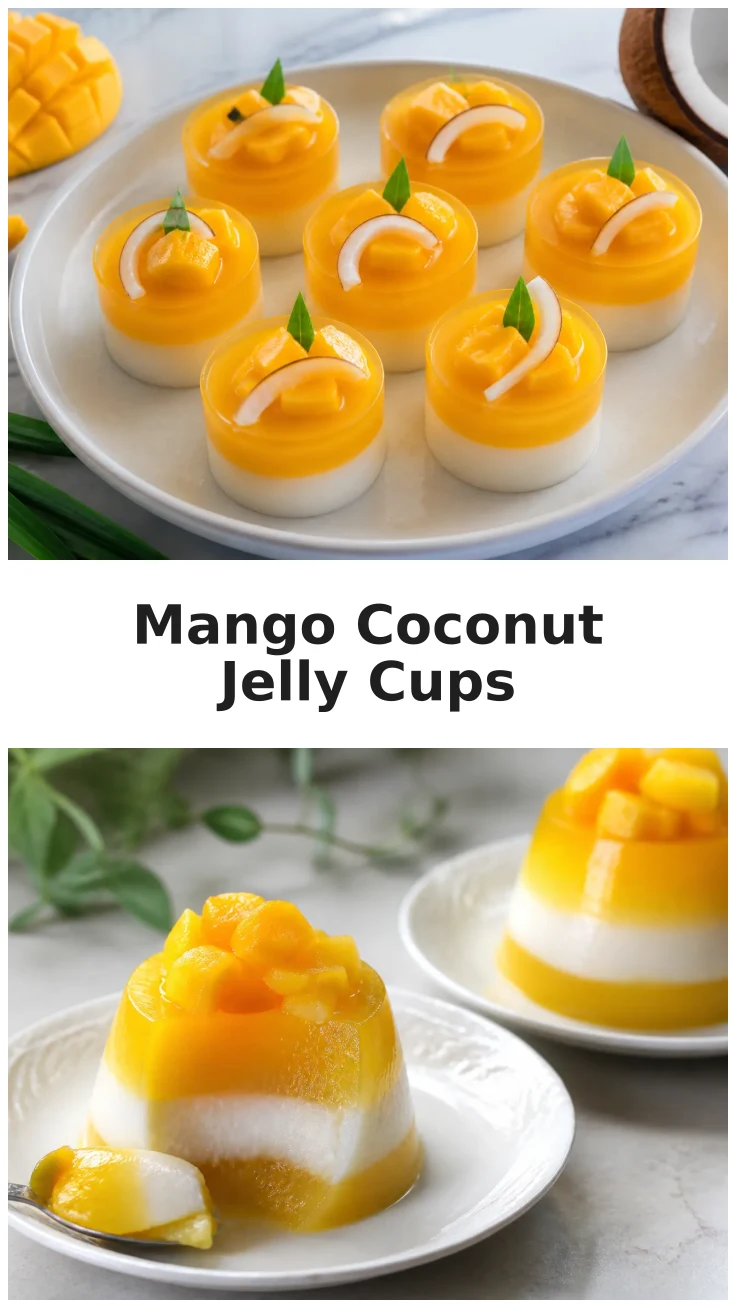
Mango Coconut Agar Jelly Cups are the perfect summer treat, offering a refreshing and delightful way to indulge in tropical flavors. These jelly cups beautifully combine the sweetness of ripe mangoes with the creamy richness of coconut milk, all set in a delicate agar jelly base. Perfect for a tropical dessert, this recipe will transport you to a sun-kissed beach with every bite.
Whether you’re hosting a summer party or simply craving a cool dessert, these agar jelly cups are sure to impress. Made with simple ingredients and easy techniques, they are a great way to showcase the flavors of mango and coconut in a unique and delicious way.
The Perfect Tropical Dessert
This tropical jelly dessert is not only visually appealing but also a treat for the taste buds. The vibrant color of the mango layer contrasts beautifully with the creamy white coconut layer, making it a feast for the eyes as well as the palate. It’s a perfect dessert to cool down on a hot day or to add a touch of the tropics to any occasion.
Why You’ll Love This Recipe
You’ll love this recipe for its simplicity and the exotic flavors it brings to the table. It’s a no-bake dessert that requires minimal effort but yields stunning results. Plus, it’s vegan-friendly and gluten-free, making it suitable for a variety of dietary preferences. The use of agar powder instead of gelatin also ensures a firm texture that holds up well, even in warm weather.

Love easy home cooking like this? 🍔
Get simple American recipes, quick dinners and homemade desserts in your inbox every week. Free, no spam, unsubscribe anytime. See our Privacy Policy.
Ingredients
Essential Ingredients for Jelly Cups
To make these Mango Coconut Agar Jelly Cups, you’ll need a few key ingredients:
- Fresh ripe mangoes: Choose mangoes that are fragrant and slightly soft to the touch.
- Coconut milk: Use full-fat coconut milk for a rich and creamy texture.
- Agar powder: This is a plant-based gelling agent that provides a firm texture to the jelly.
- Sugar: To add sweetness to both the mango and coconut layers.
- Water: Used to dissolve the agar powder and help set the jelly.
Where to Find Agar Powder
Agar powder is commonly found in Asian grocery stores or the international aisle of major supermarkets. It’s also available online and is a great alternative to gelatin, especially for those following a vegetarian or vegan diet.
Pro Tips
Creating the perfect Mango Coconut Agar Jelly Cups is all about technique and attention to detail. Here are some tips to ensure your dessert is flawless:
- Use fresh, ripe mangoes for the best flavor and color.
- Ensure the agar powder is completely dissolved in water before adding to the other ingredients.
- Allow each layer to set completely before adding the next to maintain clean separation.
- Experiment with flavor variations by adding a splash of lime juice to the mango layer for an extra zing.
The most important tip is to be patient during the setting process. Rushing through this step can result in layers blending together or not setting properly.
Step-by-Step Instructions
Preparing the Mango Layer
To prepare the mango layer, blend the mango flesh with sugar until smooth. In a small saucepan, combine agar powder with water and bring to a boil, stirring constantly to prevent clumps. Once dissolved, add the mango puree and mix well. Pour the mixture into serving cups, filling halfway, and let it set in the refrigerator.
Creating the Coconut Layer
For the coconut layer, combine coconut milk with sugar in a saucepan. Dissolve agar powder in water separately, then add to the coconut milk mixture. Bring to a gentle simmer while stirring until well combined. Pour over the set mango layer and allow it to set completely in the refrigerator.
Assembling the Jelly Cups
Once both layers are set, the jelly cups are ready to be served. You can garnish them with fresh mango slices or shredded coconut for an extra touch of elegance.
Love easy home cooking like this? 🍔
Get simple American recipes, quick dinners and homemade desserts in your inbox every week. Free, no spam, unsubscribe anytime. See our Privacy Policy.
Serving Suggestions
Perfect Pairings for Your Jelly Cups
These Mango Coconut Agar Jelly Cups pair wonderfully with light, fruity desserts such as Peach Shortcake Cups or No Bake Lemon Cheesecake Cups. They also complement breakfast dishes like Coconut Peach Cobbler Overnight Oats.
Garnishing Ideas
Garnish your jelly cups with fresh mint leaves, a sprinkle of toasted coconut, or a few fresh berries for added color and flavor.
Nutritional Information
Calorie Count and Nutrients
Each serving of Mango Coconut Agar Jelly Cups contains approximately 150 calories, with 3 grams of fat, 30 grams of carbohydrates, and 1 gram of protein. This dessert is low in calories and perfect for anyone looking for a light yet satisfying treat.


Mango Coconut Agar Jelly Cups

Equipment
- 1 blender
- 1 saucepan
- 8 serving cups
Ingredients
Mango Layer
- 2 cups ripe mangoes peeled and diced
- 1/4 cup sugar
- 1 tsp agar powder
- 1 cup water
Coconut Layer
- 1 1/2 cups coconut milk
- 1/4 cup sugar
- 1 tsp agar powder
- 1/2 cup water
Instructions
Preparation
- In a blender, combine the diced mangoes and sugar. Blend until smooth and set aside.
- In a saucepan, combine agar powder and water. Bring to a boil, stirring constantly. Add the mango puree, stir well, and pour into serving cups, filling each halfway. Refrigerate until set.
- In another saucepan, combine coconut milk, sugar, and agar powder dissolved in water. Bring to a gentle simmer, stirring constantly. Pour over the set mango layer in each cup. Refrigerate until fully set.
Serving
- Once set, garnish with fresh mango slices or shredded coconut. Serve chilled for the best texture and flavor.
Storage
- Cover with plastic wrap or store in an airtight container. Keep refrigerated and consume within 3 days for optimal freshness.
Notes
FAQ
Can I use gelatin instead of agar powder?
While gelatin can be used as a substitute for agar powder, it’s important to note that the texture and firmness of the jelly will differ. Agar sets more firmly than gelatin and is also vegan, making it a preferred choice for those following a plant-based diet. If using gelatin, follow the package instructions for the correct quantity and setting method.
How long can I store Mango Coconut Agar Jelly Cups?
Mango Coconut Agar Jelly Cups can be stored in the refrigerator for up to 3 days. It’s best to cover them with plastic wrap or store them in an airtight container to prevent them from absorbing any refrigerator odors. For the freshest taste and texture, it’s recommended to consume them within this time frame.
Enjoyed this recipe? Leave a review!
There are no reviews yet. Be the first one to write one.

